+977-9851241796
[email protected]

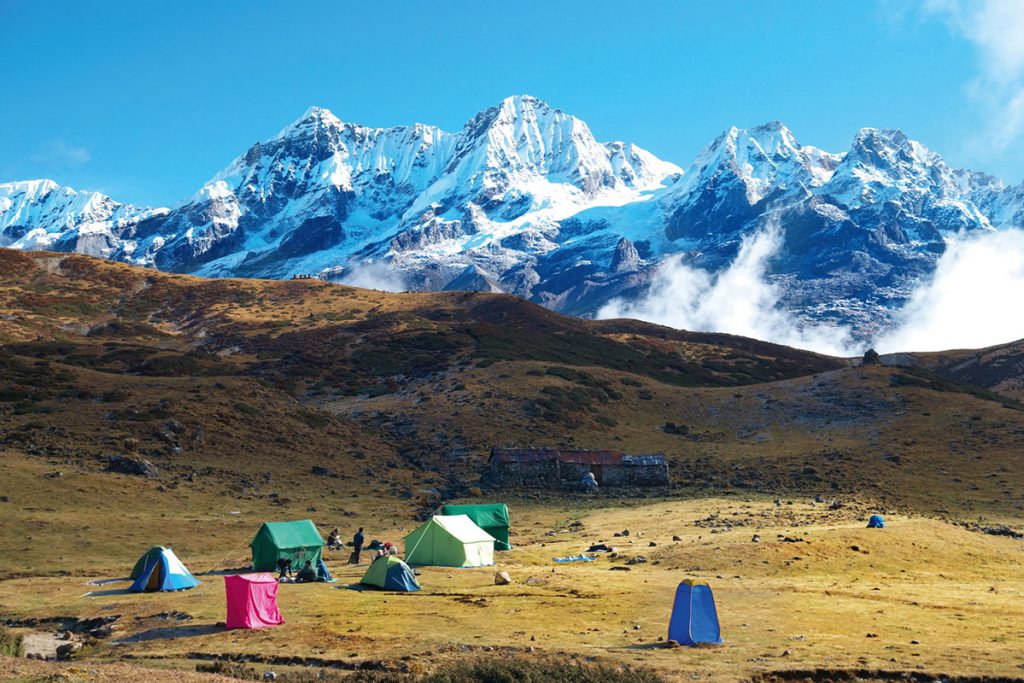
“Mustang”, also known as Desert of Nepal, is situated in the northern central part of the Great Himalayan Range of Nepal. It is one of the remote and unexplored areas of Nepal. It is also famous as the “Last Forbidden Kingdom” amongst the trekkers as it was restricted for outsiders until Nepal government announced the restricted areas in October 1991. Only limited numbers of visitors are allowed each year from Nepalese Department of Immigration in order to conserve their unique and ancestral tradition found in its original taste, till date, from the outsiders. Upper Mustang Trekking is also known as Lo-Manthang trekking which starts from the river bank of Kaligandaki (world’s deepest gorge) which is the only river in the world having Shaligram (a holy stone in Hinduism and also a stone containing fossils) into the high elevated Lo-Manthang. The trek reminds of Himalayan creature “Yeti” as it was believed to have found its footprints along the Kaligandaki riverbank. The panoramic view of some of the world’s top ten mountains like Dhaulagiri, Annapurna, Nilgiri and other peaks distinguish the Upper Mustang Trekking from other trekking and thus, making it one of the popular trekking regions of Nepal.
Mustang holds a unique flavor of Tibetan Buddhism. The closeness to the centuries old monasteries, shrines, caves and culture is the most attracting factors for pilgrims. Besides, the beautiful land escapes that seems like a unique painting, yak caravans, the flat roofed stone houses, lifestyle of the people ,the history and myths of the place related to its culture makes its more and more stupendously luring for the trekkers. To our surprise, they practice polyandry in their lives where all the brothers of the family get married to a single girl. The other major attraction of trekking in Upper Mustang is a TIJI Festival which occurs in the dry season (late winter/early spring). TIJI Festival is a three days long ritual, known as” The chasing of the Demons”. Over the festive time monks are dressed in elaborate costumes and masks and perform dances and rituals that are supposed to drive away evil spirits. All people from all over Mustang gather in Lo- Manthang to celebrate this festival.
TIA Kathmandu
3 Hours Before Flight Time
We will welcome you at Tribhuvan International Airport upon your arrival and transfer you to the hotel for the overnight stay. Our representative would be at airport to receive you please look for the placed card having your name.
Today we will spend most of our day sightseeing around some of the world heritage sites of UNESCO inside Kathmandu valley. Most importantly we will complete all the necessary paper works and make other preparations required for Upper Mustang Trekking.
It takes around 6-7 hours to reach Pokhara from Kathmandu either by bus or you can also take the flight which take about 30 minutes and in the remaining time, take your time to explore the Pokhara city and Lakeside. Overnight Stay at Pokhara.
Our team helps you to transfer for Pokhara Airport to fly for Jomsom. This adventurous flight takes about 20-25 minutes passing through the world’s deepest George presenting spectacular mountain views of Mt. Dhaulagiri, Annapurna Ranges and Fishtail with several famous peaks within. After landing here we start our trek and on walking for 3-4 hour we reach Kagbeni. We can enjoy the astounding views of Mt. Dhaulagiri, Nilgiri and Tukuche peak while following the trail in the opposite direction. Overnight at Kagbeni
We get our permits checked then begin our trek on a trail alongside the Kali Gandaki River. We walk on sand amidst strong winds before ascending on a hill. Chusang village is only about 2 hours walk beyond Tangbe at the confluence of the Narshing Khola and the Kali Gandaki. We find white washed houses, fields of buck wheat and barley and apple orchards on the trails to Chksang
There is a distinct change in the culture, lifestyle and people, and the settlements become more scattered, smaller and more basic but not in the topographic condition. From Chele we climb a stiff spur and then continue climbing along the side of a spectacular steep canyon to a pass. Beyond the pass we decline on a pleasant trail to Samar, situated in a grove of poplar trees. This is a major stopping place for horse and mule caravans.
We climb above Samar to a ridge and then descend into a large gorge past a chorten before entering another valley filled with juniper trees. We then cross a stream and after climbing to a pass, you descend along a ridge to Shyangmochen a tiny settlement with a few tea shops. Nearby is Rangbyung, a cave containing stalagmites which have formed in the shape of chortens and one of the holiest places in Mustang and stones, with roofs made of twigs, straw and a mixture of mud and pebbles.
From Ghilling the trail ascends gently through fields, up the center of the valley, On passing the settlement of Tama Gun and an imposing chorten. The descent from the pass is quite gentle and about half an hour further on we come to a trail junction; the right trail is the direct route to Charang. We will have the magnificent views of the countryside, from the gentle contours of the north to the rugged mountains in the east and west, are a source of inspiration. Overnight Stay at Charang.
We trek to Lo-Mangthang with a magnificent view of Nilgiri, Tilicho, Annapurna I and Bhrikuti peak. The trail first descends to Charang Chu Canyon and then climbs steeply after crossing the river. We are likely to observe Lo-Mangthang, views of the walled city appear magnificent with its hills on the Tibeaten border. Further the trail ascends gently to the 3,850m windy pass of Lo, from where you can see the Lo-Mangthang Valley. While descending to Lo-Mangthang, views of the walled city appear magnificent with its hills on the Tibetan Border. We stay at hotel for the overnight stop.
Today we explore the surrounding areas and visit Namgyal Gompa and Tingkhar. Namgyal Gompa situated on a hilltop that serves as an important monastery of the local community and also as a local court. After visiting Namgyal Gompa we continue the tour to Tingkhar, the last main village to the northwest of Lo-Mangthang and stroll back to hotel. Another attraction is the four- storey building of the Raja’s palace as well as the surrounding views of the Himalaya.
While returning from Lo-Mangthan, we take a different route than that we came by. Trek to Drakmar via Gyakar with more than 1200 years old Ghar Gompa with Guru Rinpoche as the primary figure. The Gompa is also famous for its rock paintings. According to the legend, anyone who makes one wish at the Ghar Gompa, their wish is fulfilled , furthermore we explore the local area. Likelihood of dusty wind, so suggested to walk in the morning.
The trail now descends, passing the stone walls and fields of Drakmar before climbing to a ridge. It further descends to the lower part of Ghami and then to Jaite (3820m), dropping again to Chhung-Kah. We continue to Tama Gaon (3710m) and down to Shyangmochen.
We follow the trails along the stream all the way down to Chhusang. We can also take an alternative route to Samar visiting Ranchung Cave. The alternative route is just 30-minutes longer too.
Today we will follow the stream, pass Chhusang village and make a short steep climb onto the valley floor. We keep ascending until we reach a small pass from where we can see Muktinath and the red painted Buddhist Monasteries. After traversing the pass, we drop down to the stream and cross a suspension bridge. We ascend for a while and walk through the villages to Muktinath. It also offers a terrific 140 degree view of the Annapurna, Dhaulagiri and Tukuche Himalayan range.
In the morning, we visit the Muktinath Temple. People regard this region as a sacred place of liberation or salvation. There are water spouts channeled for the stream running above the temple. There is also a Buddhist Monastery nearby. We also enjoy the magnificent views of Dhaulagiri peak from Muktinath. Muktinath itself demonstrates the religions harmony in Nepal. From Muktinath, we continue back to Jomsom.
We fly to Pokhara after breakfast. The flight itself is astonishing; the spectacular views of the Annapurna and Dhaulagiri ranges and over the deepest gorge in the world are close by to cheer us up. The warmer climate in Pokhara will definitely make us feel better. We could also visit the Davis falls and traverse by some caves and even boat; to see reflection of Fishtail Mountain at Phewa Lake. In the evening, we can ramble around the lakeside area and buy reminiscences for loved ones. Overnight in Pokhara.
Another short flight takes you back to Kathmandu, the capital of Nepal. We can take a rest in our hotel room and spend the rest of day in leisure. In the evening, there will be a farewell dinner hosted by Merit Adventure to celebrate the successful completion of our journey. Overnight in Kathmandu
Our trip to Nepal ends today. We will be dropped off at the airport by a company representative 3 hours before the scheduled flight.