+977-9851241796
[email protected]


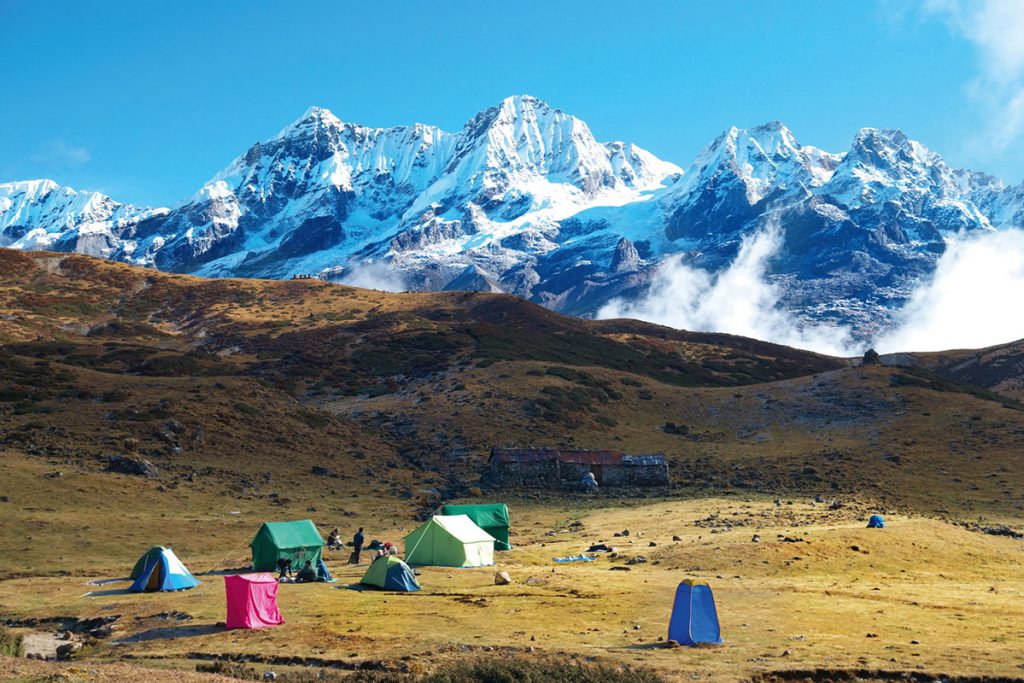
Tsum Valley trek allows us to discover the secret Tibetan Buddhist land lying at the edge of one of the most hidden Himalayan valleys. Tsum Valley is one of world’s remotest Himalayan Valleys which was also a restricted region until recently. The Tsum Valley trek allows us to witness glorious views Himal, Sringi Himal, and Boudha Himal ranges. The region once being part of Tibet looks completely different from what you will find elsewhere. The inhabitant of Tsum Valley or the Tsumbas belong to Tibetan origin with their own ancient form of dialect, art, culture and religion. Very few adventure travelers have made it to this high and mysterious valley, which used to be an important trade link with Tibet. In the initial days, we follow the trails of Around Manaslu Trek or the Manaslu Circuit Trek. The Tsum Valley lies on the northern part of Manaslu and used to be a restricted area until 2008. The region is still less exposed in comparison to other touristy areas, with relatively virgin and less beaten paths in comparison to the more popular regions. The Tsum people have their own way of family life, which may be quite surprising for many outsiders. All the brothers in the family are married to a single girl, what you may call a practice of polyandry.
Initially, our trip starts from Kathmandu. We cruise down to Arughat. But our trekking starts and ends from Arughat. We cross half of the route by the banks of Budi Gandaki River. The marvelous views of beautiful forest, terraced fields and hilly villages can be seen hiking beside the Budi Gandaki River. In addition, the path goes through alpine forest, pristine glacial rivers and warm friendly peoples. Passing through Machhakhola, Jagat and Philim and other beautiful vibrant villages we reach the gorgeous Tsum valley where we can enjoy its natural beauty. On our way back, we follow the same path to return to Kathmandu.
TIA Kathmandu
3 Hours Before Flight Time
We will welcome you at Tribhuvan International Airport upon your arrival and transfer you to the hotel for the overnight stay. Our representative would be at airport to receive you please look for the placed card having your name.
Today we will spend most of our day sightseeing around some of the world heritage sites of UNESCO inside Kathmandu valley. Most importantly we will complete all the necessary paper works and make other preparations required for Tsum Valley trek.
We take an 8-9 hrs bus or private jeep ride to Arughat Bazaar in Gorkha district. The village of Arughat is in two parts(with the Budhi Gandaki river flowing between them), on opposite sides of the Budi Gandaki. Arughat Bazaar is large, clean and prosperous with hotels and shops selling cloth, food and hardware. Overnight at Arughat.
We follow the trails of the banks of Budi Gandaki River through Gurung villages & farming fields up to Kurseni will be the first day of our trek. The day could be hot and bothersome due to low elevation so we suggest you to wear light clothes. Overnight at local tea house in Khursani with all meals.
After having breakfast, we head for Jagat following the same river and passing some gorges of Budi Gandaki River and fewer cultivated areas. The trail gradually goes ascending from today. Today, we will be entering in the restricted areas of Jagat. Overnight stay at Jagat.
We follow the trails of same river, we will be heading to Lhokpa which is about 7-8 hours trek. The trail goes through narrow valleys and green vegetation. The trek can be good as you can observe glorious views of Mt. Ganesh and Mt. Shringi. Overnight at local tea house with all meals
After having breakfast, we will leave for Chumling walking for about 3 hours. Still following the same river, we will be walking on the bank of Budi Gandaki River on the same way for Manaslu round trekking. After enjoying lunch on the way, we will hike through a wild lesser known route of Tsum valley. The trail mostly goes through the forest and some quaint Gurung villages. We will camp at a Gurung village. Overnight in Chumling.
We begin our trek from Chumlin to reach Chhokangparo. Upper Tsum valley (part of the Inner Himalaya) open from Chhokangparo as it is a village situated on flat land and made up of two settlements Chhekam and Paro. From the valley, the Ganesh Himal range can witness magnificent views of the Baudha and Himal chuli peaks to the south-west. We can observer some polyandry practiced in these villages.
We begin our trek from Chhokangparo and reach Lama Gaun which takes about 2-3 hours of short walking. The trail goes upwards inclining through the local villages and wider cultivated land and also partly through pine forest . After 3 hours we will be at Lama Gaun where we can visit Milarepa cave monastery which is about 45 minutes walk from the campsite. Overnight in Lama Gaon.
From Lama Gaon the trail gradually elevate to Mu Gumba, the largest monastery in this area. Mu Gomba was established in 1895 AD and is situated at an altitude of 3510m. The monastery houses religious books, including Kangyur, a life sized statue of Avalokiteshwara, and images of Guru Padmasambhava and Tara. The oldest monasteries in the Tsum Valley “Dephyudonma Gumba” is situated in the rugged mountains, a 2 hr walk from the village of Chhule and Nile. The history of this monastery is directly associated with the dawn of Buddhism in the valley. There are a few campsites and drinking water facilities. But we stay out for the night in our lodge with all meals.
We will be following trails over Narrow and Cliffy trails that ascends to Bajyo. So the trekkers need to be connected and concentrated while walking. The trail passes through Lakpa and Kalung Kharka. Overnight at camp with all meals.
Today we will have leisure day at Bajyo. We will go toward the border and spend some time there. We leave behind Nguladhojyang pass which is regarded as a trade route between Nepal and Tibet which is at 5,093 meters. It is your choice either to visit it or take some more rest at the camp. But if you walk up to the top then, you can see beautiful landscapes of Tibet plateau around Kerung which is the border of Nepal & Tibet along Syabrubesi. For your convenience , our crew will provide you packed lunch on the top. After enjoying some sightseeing at the top, we will come back to camp. Overnight at local tea house with all meals.
From Bajyo we take the trail to Rachen Gumba, a nunnery. The nunnery is situated in the Shiar Khola Valley in the foothills of the mountains bordering Nepal and Tibet. Rachen Gumba is one of the largest nunneries in the Tsum valley established in the on 1905 AD . The nunnery houses one thousand clay, molded statues of Avalokiteshwara, a brightly colored, carved throne and pillar, and a large prayer wheel. The center is richly painted with murals about Buddhism and its history. Overnight at our teahouse lodge with all meals.
From the Rachen Gompa, we follow the trails above the river Shiar Kholato that gets joined by the next trail on the same route up to Lama Gaun village. Overnight at local tea house with all meals.
After having our breakfast, we will start our journey for Philim. We will descend down through green forest up to Philim. A trail passes through the Phillim village that leads to the Ganesh Himal Base Camp. And we will stay overnight at local tea house with all meals.
The last day of trekking, we will head towards Lhapubesi after having breakfast. It is about 6 hours walk. We stay overnight at local lodge with all meals.
Today is our last day of the trek. So, we will move towards Arughat to board our vehicles for Kathmandu. Stay overnight at guest houses on full board meals.
We drive to Kathmandu in the morning. After reaching there , we will be dropped off at our hotel in the city. We can spend the day taking the much needed rest or catch up on some last minute shopping. Either way, we mark the end of our successful trip with a farewell dinner hosted by Merit Adventure where we can share our experiences of the trek before flying back home the next day. Overnight in Kathmandu.
Our trip to Nepal ends today. We will be dropped off at the airport by a company representative 3 hours before the scheduled flight.